By Kristin Hewer, Environment Committee member
International Compost Awareness Week (ICAW) runs from May 3 to 9, 2026, and it’s the compost industry’s biggest education and awareness program with the furthest reach.
This awareness week is celebrated worldwide during the first full week of May each year and this year’s theme is Compost! Feed the Soil that Feeds Us.
This week brings people together to learn and share the benefits of composting organics and then using that compost to build healthier soil.
ICAW encourages action at multiple levels, whether it’s communities, schools, governments and businesses all celebrate different types of composting.
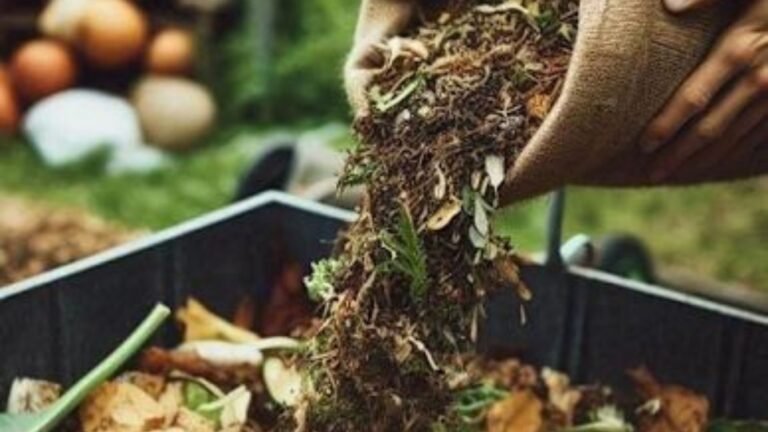
Composting ranges from small backyard efforts to community curbside compost pick up to large scale commercial operations. We can all play a role in creating a more sustainable future by composting.
You might be wondering what are some of the benefits of composting?
- Reduces methane emissions, helping reduce contributions to climate change
- Lowers greenhouse gases by improving carbon separation on the soil
- Provides essential nutrients for plants, boosting gardens and farms; healthier soils = healthier food for communities
- Increases water holding capacity of our soils, important in times of drought and/or intense rain events that cause runoff and erosion
Here are some backyard composting Do’s and Don’ts from the David Suzuki Foundation.
DO:
- Alternate layers of nitrogen rich greens (veggie peelings, fruit, coffee grounds, tea leaves) with carbon rich browns (dry leaves, grass, plant stalks, shredded newspaper, cut up cardboard and other unbleached paper products such as napkins or paper towels
- Add rinsed, crushed egg shells and pet hair (helps to discourage rodents)
- Compost in a level, shady spot with good water drainage for your bin
- Leave lots of airspace and mix the contents weekly
DON’T:
- Add items that are oily or fatty or food items such as bread or pasta
- Put weeds with mature seeds, this will spread the weeds
- Put any yard clippings that have been treated with pesticides in your compost
If you don’t have the space for backyard composting, many municipalities now offer curbside compost collection, please check with your local waste management provider for more information on what compost services are available in your community.
For more information please visit: davidsuzuki.org or compostfoundation.org/icaw